If you have watched the local forecast lately, you have probably heard the words "El Niño" more than once. Forecasters at NOAA say this one is shaping up to be among the strongest on record, and it will be in place all winter.
That does not mean East Tennessee is in for a disaster. It does mean the odds lean toward a wetter, more active winter than usual, and water is the one thing every roof has to manage.
The good news is that fall is the right time to get ahead of it. Here is what El Niño is, what it tends to do to our weather here at the foot of the Smokies, and a few simple steps to make sure your roof is ready.
What is El Niño, and where do things stand?
El Niño is a natural warming of the Pacific Ocean along the equator. It happens every few years, and when that water warms up, it shifts the jet stream and changes storm tracks across the whole country for a season or more.
This year's event is a big one. In its September 10 update, NOAA's Climate Prediction Center reported that El Niño is already here and still strengthening, with a greater than 90% chance of a very strong event through fall and winter. NOAA also put the odds at 75% that it becomes the strongest El Niño in records going back to 1950. (Source: NOAA Climate Prediction Center)
One honest caveat, straight from the forecasters: a strong El Niño raises the chances of its typical weather patterns, but it does not guarantee them. Think of it as loaded dice, not a promise.
What it usually means for an East Tennessee winter
The short version: plan for more moisture, and do not count on a mild winter.
El Niño tends to push the storm track south, which sends more rain and winter storms across the southern states. NOAA's September winter outlook leans wetter than normal for East Tennessee and western North Carolina from December through February. (Source: Smokies Live)
Temperatures are harder to call. NOAA's outlook leans warmer than normal across much of the eastern U.S., but local forecasters note that Tennessee sits right on the dividing line and could land on the colder side in January and February. (Source: WVLT)
Recent history backs up the caution. The last strong El Niño winter was 2023-24. Most of it was quiet, then one January storm dropped about 8.5 inches of snow on Knoxville in under 36 hours and took the temperature down to zero. (Sources: National Weather Service, WATE)
So a realistic picture of this winter looks like this:
- More frequent rain, sometimes for days at a time
- Mild stretches broken up by sharp cold snaps
- A real chance of at least one heavy, wet snow or ice event, especially in the higher elevations of Sevier and Blount counties
Why that matters for your roof
A healthy roof handles all of this without trouble. A wet, up-and-down winter is hard on roofs that already have a small weakness, because it gives water more chances to find it.
Long, soaking rains. A quick summer shower may never reach a cracked pipe boot or a loose piece of flashing. Three days of steady rain will. Most winter leaks we see start at these small details, not in the middle of the shingles.
Clogged gutters. Once the leaves come down, full gutters send water back up under the roof edge. Over a wet winter, that rots fascia boards and the wood decking underneath.
Freeze and thaw. When it is 55 degrees one day and 15 the next, water that worked into a small gap freezes and expands. Each cycle opens the gap a little wider and wears on sealants and flashing.
Heavy snow and ice. Wet snow is heavy, and when attic heat melts it from below, the water can refreeze at the cold roof edge and back up under the shingles. It is less common here than up north, but it happens in homes with thin attic insulation or poor ventilation.
Winter wind. Strong fronts can lift older shingles whose seal strips have worn out, leaving the layer underneath exposed to the next rain.
Attic moisture. Warm, damp air from the house meets a cold roof deck and condenses. It can look just like a roof leak, and it comes from ventilation, not from the shingles.
What you can do now: a fall roof checklist
Every step below can be done from the ground, a window or the attic. Please stay off the roof itself. It is not worth the risk, and walking on shingles can do damage of its own.
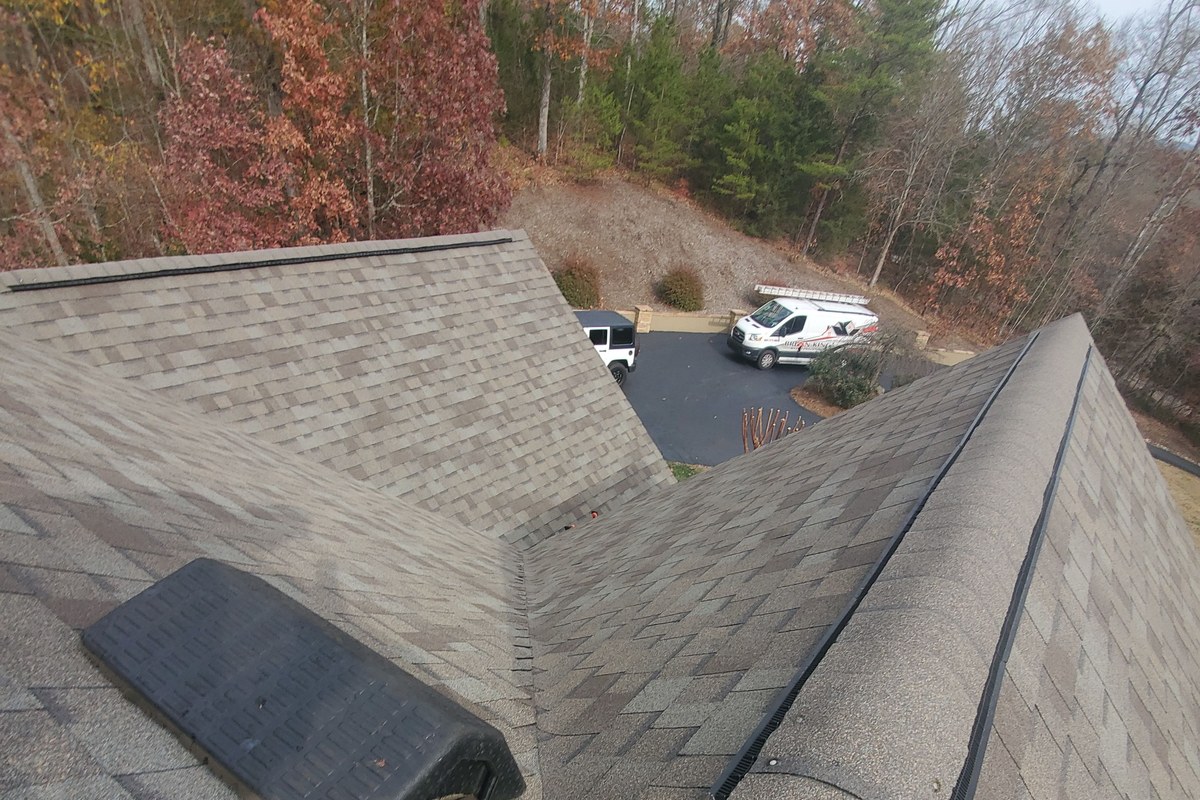
- Walk around the house and look up. Binoculars help. Look for missing, cracked, curled or lifted shingles, and for any spot where the roofline sags.
- Clean the gutters and downspouts. Do it after most of the leaves are down, and make sure each downspout carries water away from the foundation. A lot of sand-like shingle granules in the gutter is a sign of an aging roof.
- Check the details where water gets in. Look at the flashing around the chimney, skylights and walls, and at the rubber boots around plumbing pipes. Those boots often crack well before the shingles wear out.
- Take a flashlight into the attic. A rainy day is best. Look for water stains on the wood, damp or matted insulation, a musty smell, or daylight showing through.
- Make sure the attic can breathe. Insulation should not be covering the soffit vents at the eaves. Good airflow keeps the roof deck dry and helps prevent ice at the roof edge.
- Trim back overhanging limbs. Branches scrape shingles in the wind, drop leaves into gutters, and come down under wet snow and ice.
- Look at your ceilings. New stains, peeling paint near an outside wall, or marks around a skylight are worth tracking down before winter, not after.
- Know how old your roof is. If your shingles are around 20 years old or older, a professional inspection this fall is a good idea, even if nothing looks wrong from the ground.
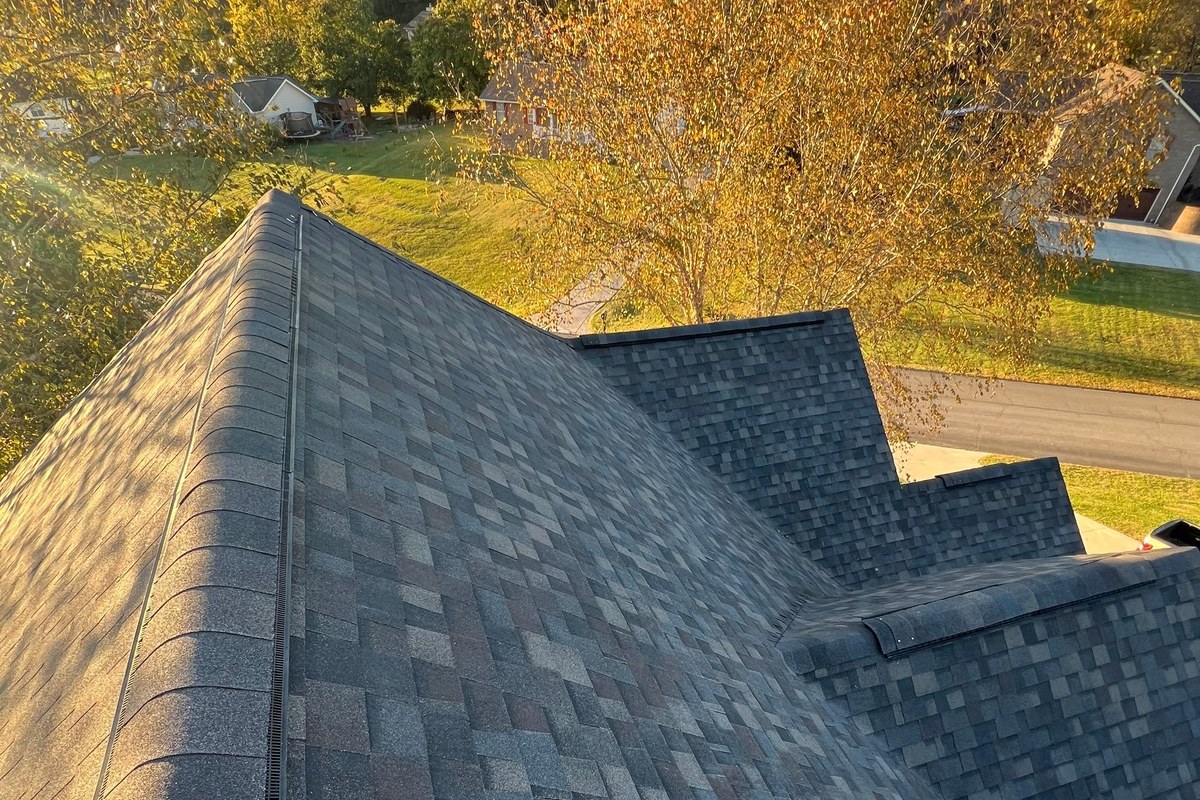
If you find something, fall is the time to fix it. Small repairs are simpler and faster in dry weather than in the middle of a wet January.
When to call a professional
Some things are worth a trained set of eyes. Give a roofer a call if you notice:
- Missing, lifted or badly curled shingles
- Water stains in the attic or on a ceiling
- Cracked or rusted flashing, or split pipe boots
- A sag or dip in the roofline
- A roof around 20 years old that has not been looked at in a while
A good inspection should end with photos and a straight answer. Sometimes that answer is a small repair. Sometimes it is that your roof is in fine shape and ready for whatever winter brings. Either way, you will know before the weather turns.
Brian King Roofing has been taking care of roofs across Knox, Sevier and Blount counties since 1991. We are family-owned, an Owens Corning Platinum Preferred Contractor, and we work for the homeowner.
If you would like us to take a look at your roof before winter sets in, call us at 865-573-6859.
Ryan King Brian King Roofing, Inc. Trust the roof over your head.